DC’s Next Mayor Wants Change
An interesting thing happened in March. DC’ Office of Planning took baby steps to ending a century of exclusionary zoning in the Nation’s capital. And the reaction from the District’s next mayor was priceless.
Who is the District’s next mayor, you ask? We don’t know for sure, but the odds are extremely high that it will be either Council member Janeese Lewis George or former Council member Kenyan McDuffie. In either case, these two candidates reacted to the Office of Planning’s efforts in similarly ways: not enough change, go back and do more.
The Office of Planning released a proposed revision of the map that plots how the District should grow of the next 20+ years, the Comprehensive Plan’s Future Land Use Map, or FLUM. The one thing you notice when you look at it is how little area of DC is proposed to be changed. The areas proposed for change are outlined in the map below.
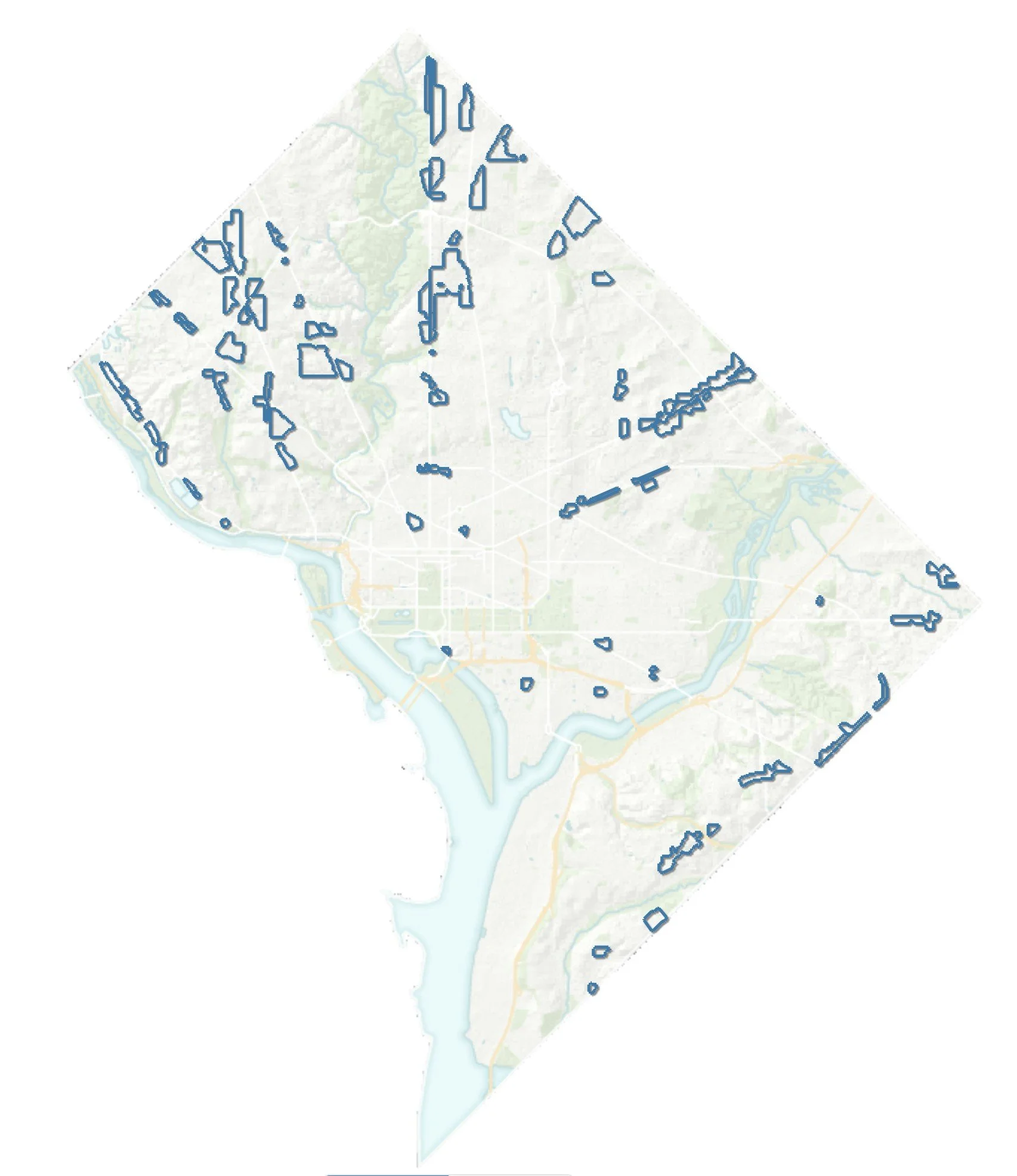
DC 2050 Future Land Use Map - Change Areas
While some of the change areas proposed follow the traditional growth patterns of the last update to the FLUM in 2021, along transit corridors, other areas, particularly in Wards 3 & 4, call for growth in areas currently reserved for single family homes. Cleveland Park, Observatory Circle, Cathedral Heights, Friendship Heights, are proposed to change to accommodate not Low Scale Residential, but the next grade up, Moderate Scale. Many areas of Low Scale Residential are left un changed.
When asked for their opinions of the proposed FLUM, the major mayoral candidates told housing advocates like DC YIMBYs, which stands for “Yes In My Back Yard,” that they would go farther. Listen in their own words.
Kenyan McDuffie said he would legalize six-plex apartments District-wide. That means any area zoned residential in DC could put up a small apartment house that had up to six units.
I will also send the current draft Future Land Use Map (FLUM) back to the Office of Planning (OP) with a directive to increase housing supply of 12,000 new housing units by 2030. A FLUM that locks in a quarter-century of exclusionary zoning is incompatible with DC's housing goals, and I will not sign one.
Q: Legalize up to Six Homes on All Residential Lots: Allow small apartments citywide.
A: Yes, I support this. My plan commits explicitly to using the Comprehensive Plan rewrite to allow more housing types citywide, including rowhouses and small apartment buildings, by increasing density designations across all 8 wards. Concentrating housing growth in a handful of neighborhoods has failed. Legalizing small multifamily buildings on all residential lots distributes that growth city-wide and reduces displacement pressure in overheated corridors. My platform also commits to eliminating unnecessary barriers to in-law suites and accessory dwelling units as part of the same citywide legalization effort.
Janeese Lewis George took a similar approach, both in her response to DC YIMBYs and penning her own article in the urbanist outlet, Greater Greater Washington, where she said she would :
Make modest starter homes possible, and use residential lots to their greatest potential, by legalizing small apartment homes up to six units District-wide and easing setback and side-yard requirements to make sure that housing isn’t just legal on paper, but actually gets built.
Mayoral candidates Gary Goodweather and Rini Sampath, as well as at-large candidates Lisa Raymond and Elissa Silverman took the same position. All of the major District-wide candidates are ready for an historic land use change: ending the practice of exclusionary zoning and opening the door to legalizing gentle density across all of DC.
This is a particularly important issue in well-off Ward 3, which has a dark history of explicit and de facto racial discrimination from its start, the outcomes of which live on today. In an area where single family homes occupy more the 70% of the residential land, homes go for more than a million dollars, on average. Ward 3 Council member Matt Frumin, who gave talks about the racist and exclusionary history of his part of DC before he was elected to the Council, has been notably silent on the issue. He refused to answer questions about the proposed FLUM when asked by Greater Greater Washington. He told DC YIMBYs he supported just one of the nine housing priorities the organization wants to advance: make it easier to build in-law suites. He does not support making six-plexes legal District wide.
It is incredibly disappointing when the next mayor and the next at-large council members are ready to overturn a legacy of exclusion, the Council member who represents the most priviledge Ward says no. Unchallenged in his primary, Frumin has no incentive to step up and be heard on the issue. And so he avoids it, hoping attention won’t be drawn to his defense of exclusionary zoning.
It’s not too late for Matt Frumin to change direction. It is also not late for him to draw an independent challenger. Petition pickup for candidates is less than two months away, on June 12th. Perhaps his reticence to lead will draw a challenge from someone who, like our next mayor, has the courage to turn the page on the dark side of the Twentieth Century urban planning, take the housing crisis facing renters and first time home buyers seriously and say yes to welcoming a more accessible homes for residents. The clock is ticking.